Community rewilding charity · Harth Valley

More room for the wild.

We buy back tired ground, block old drains and plant from local seed, then let the valley do the slow work. Eighty-six hectares so far. Room for plenty more.

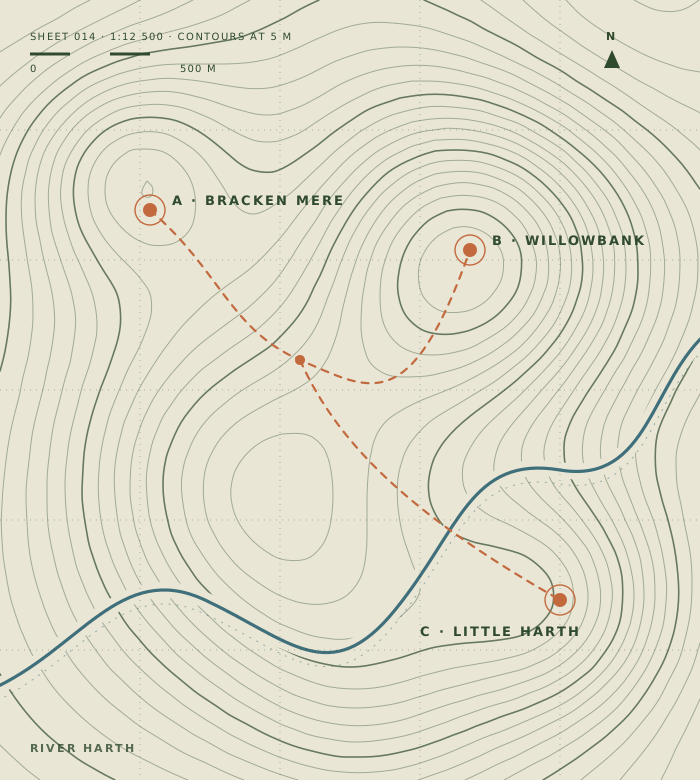
Contour map of the Harth Valley marking three restoration sites: Bracken Mere, Willowbank Wood and Little Harth, joined by a walking route along the river.
Sheet014 · Harth Valley GridHV 318 / 124 StatusRecovering
03 sites under restoration
1,140 members in the valley
89p of every £1 spent in the field

The valley lost its wet places, its long grass and most of its old trees within one lifetime. We think it can get them back in less.

Fieldwork started in 2017 when eleven neighbours pooled savings to lease a waterlogged field nobody wanted. That field is now Bracken Mere, and the reed warblers came back to it in the fourth spring.

We still work the same way: buy or lease marginal land, undo the drainage and mowing that kept it bare, plant only what grew here before, and count what returns. Every site is open to walk, every survey is published.

How a site recovers

Three sites,
one valley.

Each site has its own survey sheet, its own volunteers and its own pace. Together they make a corridor that otters, barn owls and dragonflies can travel.

Wetland28 ha

A North reach · since 2021

Bracken Mere

Forty-one drainage grips blocked by hand, six scrapes dug, and the water table back up by thirty centimetres. Reed warblers, snipe and a pair of little grebes nested this year.
Meadow16 ha

C South ridge · since 2023

Little Harth

A former silage field sown with yellow rattle to weaken the rye grass. Two summers on: 38 flowering species and the valley’s first small heath butterflies in a decade.

Woodland42 ha

B Valley floor · since 2019

Willowbank Wood

3,600 alder, oak, hazel and bird cherry grown from seed collected within five miles. We stopped using plastic tree guards in 2022; deer fencing is wooden and comes down in 2030.

Counted, not
guessed.

Every figure comes from our spring and autumn surveys, run by volunteers and checked by the county records centre.

Hectares under restoration
86ha

Up from 11 hectares in 2017.

Native trees in the ground
3,600

91% survival after three winters.

Species recorded on our land
214

Including 9 on the county red list.

Volunteer hours logged
2,140h

From 312 people aged 7 to 84.

Next report · February 2027Read the survey notes

Less tidying.
More listening.

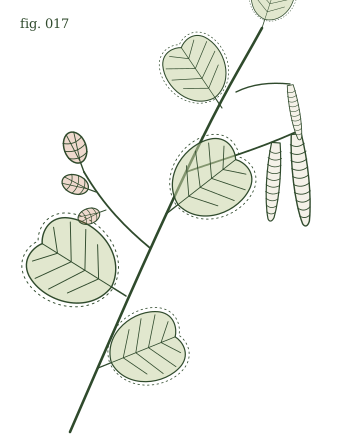
Botanical line drawing of a common alder twig with rounded leaves, hanging catkins and small woody cones.
SpecimenNo. 017 NameAlnus glutinosa HabitatRiver margins, Willowbank
  1. Year 0

    Walk it first.

    Before a spade goes in, we spend a full year recording what is already there: soil cores, water levels, breeding birds, the plants in every hedge. Neighbours tell us what the field used to be.

  2. Year 1–2

    Make one big change.

    Usually that means blocking drains, ending fertiliser or changing when we mow. One change at a time, so we can tell what worked. Seed and saplings come only from the valley.

  3. Year 3–10

    Step back and count.

    Same transects, same dates, every season. Grazing ponies from Harth Farm do the mowing. We intervene less each year, and publish every survey sheet in full.

  4. Year 10+

    Hand it on.

    Mature sites pass to a local land trust with a covenant that keeps them wild for 125 years. The money we free up goes to the next tired field.

From the
notebook.

18 Sep 2026 · Little Harth · Rowan Pike, ecologist

What one unmown strip did for the goldfinches

In June we left a three-metre strip standing along the east fence. By September it held seed heads from eleven native species.

Read the full note

On our first morning count, fourteen goldfinches fed in the strip over twenty minutes, alongside two linnets we had not recorded on site before. Next year we will leave two strips and move them, so every part of the meadow gets a winter off.

02 Sep 2026 · Bracken Mere

Six volunteers, two culverts, one morning

Read the note

We cleared two collapsed culverts by hand to keep the stream bed undisturbed. Within the hour, water was moving through the northern pool again for the first time since spring.

21 Aug 2026 · For gardeners

Five things to leave alone until March

Read the note

Hollow stems, where solitary bees overwinter. A log pile in shade. One patch of long grass. Leaf litter under the hedge. Seed heads on teasel and knapweed. Your garden is a stepping stone between our sites.

“My grandad cut peat on that mere. Last month I heard snipe drumming over it with my own daughter.”

Owen Pryce · volunteer since 2019

Bring boots.
We bring tea.

  • 24 Oct

    Hedge planting

    Sat 9:30–12:30 · Willowbank Wood, Harth Lane gate

    8 spaces
  • 07 Nov

    Culvert clearing

    Sat 10:00–13:00 · Bracken Mere, north car park

    3 spaces
  • 21 Nov

    Seed sorting by the stove

    Sat 13:00–15:30 · Seedhouse Yard barn

    14 spaces
Book a place

No experience needed. Under-16s welcome with an adult. Gloves and tools provided.